
High-voltage circuit breaker selection is rarely about nameplates alone. When engineers evaluate a dead tank vs a live tank SF₆ circuit breaker, the decision goes far beyond physical configuration and directly affects maintenance strategy, leak risk, environmental reporting, and long-term asset performance.
For utilities operating under increasing reliability expectations and tightening SF₆ regulations, the difference between a dead tank and a live tank SF₆ circuit breaker has direct consequences for maintenance workload, annual leak rate, environmental reporting, and total cost of ownership.
While both designs perform the same core function (interrupting fault and load currents using SF₆ gas, their mechanical configurations fundamentally alter how they age, leak, and must be maintained. Understanding these differences is critical for asset managers, maintenance supervisors, and environmental compliance officers who need to make informed, defensible equipment decisions.
This article breaks down the real operational differences between dead tank and live tank SF₆ circuit breakers, focusing on maintenance requirements, leak prevention strategies, and regulatory exposure rather than marketing claims.
What a “Dead Tank” Actually Means in High-Voltage Equipment
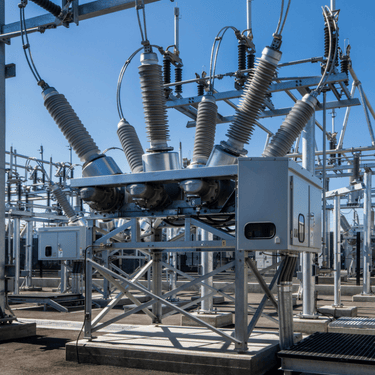
A dead tank SF₆ circuit breaker is defined by one essential feature: the interrupter tank is grounded. All high-voltage conductors pass through the grounded enclosure via bushings, while the interruption occurs inside a sealed SF₆-filled tank.
This grounded design allows several components to be integrated internally:
- The interrupter assembly is fully enclosed in SF₆ gas
- Multiple bushings create interfaces between energized conductors and the grounded tank
- Current transformers (CTs) are typically mounted under the bushings as an integral part of the tank assembly, which may require gas handling for CT maintenance and repairs.
From a mechanical standpoint, dead tanks are heavier and require more robust foundations, especially at extra-high voltage levels. From a maintenance standpoint, they introduce more sealing interfaces. Each bushing, CT flange, tank flange and inspection port represents a potential leak path over time.
This does not automatically mean higher leak rates, but it does mean more interfaces must be inspected, and tracked throughout the breaker’s lifecycle.
What a “Live Tank” Means and How It Differs
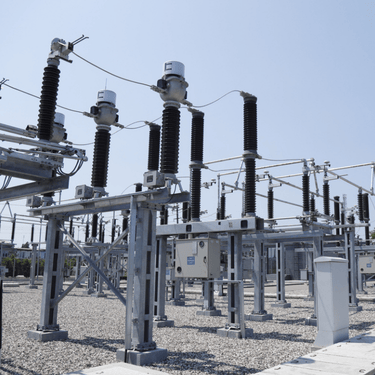
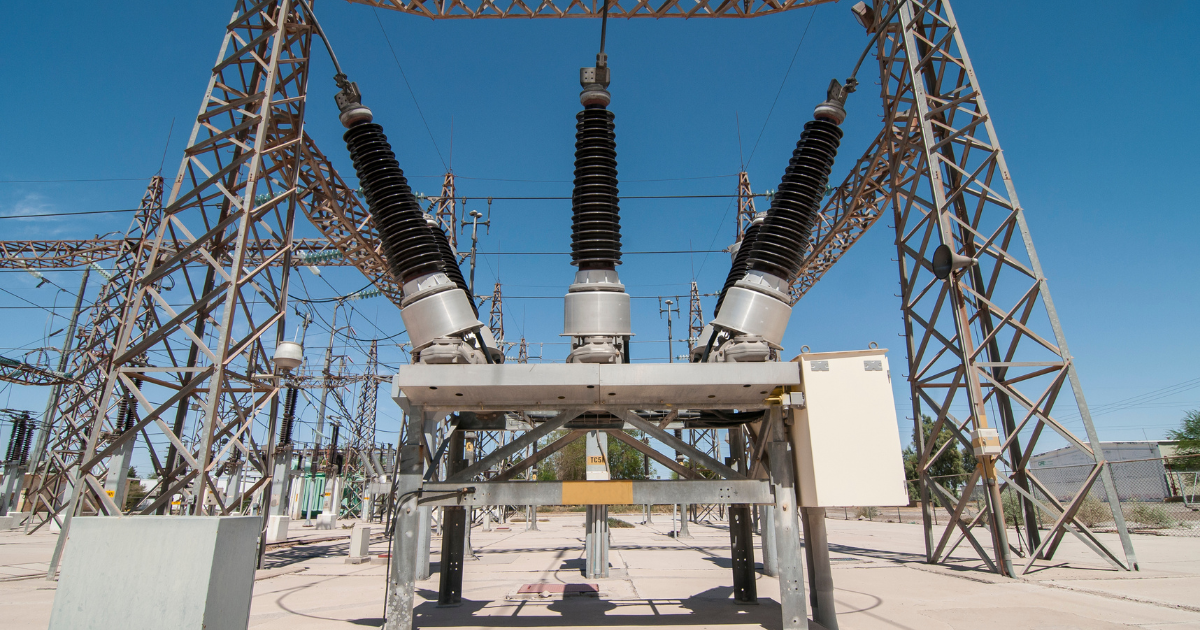
A live tank SF₆ circuit breaker places the interrupter tank at line potential. The entire interrupter assembly components are energized, supported by insulators that isolate it from the ground.
This configuration leads to several significant differences:
- Fewer grounded sealing interfaces
- CTs mounted externally, typically as standalone units (which may be SF₆ gas filled)
- Lower overall weight, simplifying transport and installation
- Reduced foundation requirements compared to dead tank designs
Because the interrupter assembly is energized, the internal SF₆ volume is often smaller. This has led to the common assumption that live tank breakers always use less SF₆ and leak less. In practice, this is not universally true. While many live tank designs do use less gas, leak behavior depends more on seal quality, operating pressure, and environmental exposure than on circuit breaker design alone.
Why Design Differences Matter for Maintenance and Leak Behavior
It is tempting to reduce the comparison to simple rules such as “more compartments mean more leaks” or “live tank means simpler maintenance.” Field experience shows that these assumptions do not always hold true.
Dead tanks have more seals, but those seals are typically protected within a grounded enclosure, shielded from UV radiation, pollution, and direct weather exposure. Live tanks have fewer seals, but many are exposed to ambient conditions, including temperature swings, solar loading, and airborne contaminants.
In other words:
- More gas compartments do not automatically mean higher leak rates
- Line potential does not automatically mean lower maintenance complexity
The real trade-offs depend on climate, installation height, switching frequency, environment, application and maintenance discipline.
Maintenance Requirements Compared
Dead Tank SF₆ Circuit Breakers: Typical Inspection Focus
Maintenance programs for dead tank breakers must account for their internal complexity. Common inspection and service tasks include:
- Monitoring multiple O-rings and elastomer seals, especially at bushing and CT interfaces
- Performing tank corrosion inspections in humid, industrial, or coastal environments
- Verifying internal CT seal integrity during outages
- Tracking SF₆ density across larger gas volumes
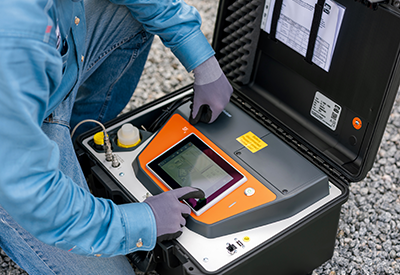
Because dead tanks typically contain more SF₆, any leakage event can result in higher refill costs and increased reporting exposure. This makes early detection especially important. Many utilities rely on periodic measurements supplemented by portable tools such as a Leak Testing device to localize minor emissions before they escalate.
Live Tank SF₆ Circuit Breakers: Typical Inspection Focus
Live tank breakers shift maintenance attention outward. Key tasks often include:
- Protecting external bushings from pollution, salt fog, and UV degradation
- Inspecting exposed mechanical linkages that experience thermal expansion and contraction
- Managing SF₆ pressure at higher elevations, where density corrections become critical
- SF₆ gas monitoring devices such as gauges, alarms and/or density monitors
Because the tank is energized, live tank maintenance often requires more stringent clearance planning and outage coordination. While there are fewer internal seals, the environmental exposure of components can accelerate aging if protective measures are insufficient.
Which Design Has Higher Maintenance Demand?
There is no universal answer to whether a dead tank or live tank SF₆ circuit breaker requires more maintenance.
- Dead tanks: more components and seals, but better environmental shielding
- Live tanks: fewer seals, but greater exposure to weather and temperature extremes
In cold climates, for example, dead tanks often perform better because the grounded enclosure provides thermal stability. In compact substations with limited space, live tanks may be easier to service and replace.
Leak Prevention Strategies for Both Breaker Types
Early Detection Is the Foundation of Leak Prevention
Regardless of circuit breaker design, utilities that successfully control SF₆ emissions focus on early detection and trending rather than reactive repairs or replacement. Effective methods include:
- Infrared imaging of SF₆ gas compartments
- Ultrasonic leak detection for flange and valve interfaces
- Continuous SF₆ density and pressure monitoring
- Scheduled baseline comparisons, such as a six-month delta analysis
- Top-off event tracking and inventory management
These approaches align with regulatory expectations and help utilities stay below published SF₆ leak-rate benchmarks used by environmental agencies.
Proven Strategies for Dead Tank Breakers
For dead tank designs, proactive measures should include:
- Replacing aging elastomer seals before they harden or crack
- Verifying bushing and flange torque after significant thermal cycles
- Installing online density monitoring for multi-compartment systems
Because internal CTs share the gas environment, seal degradation at these interfaces should never be deferred. Early intervention is almost always cheaper than large-volume SF₆ replenishment.
Proven Strategies for Live Tank Breakers
Live tank breakers benefit most from environmental hardening, including:
- Tight sealing of external mechanical enclosures
- Use of UV- and pollution-resistant coatings
- Proper drainage and moisture control to prevent condensation ingress
In colder regions, live tanks may require closer pressure monitoring to maintain dielectric performance as gas density fluctuates with temperature. And in extreme cases, SF₆ gas is mixed with N2 or CF4 to lower the gas's liquefaction temperature for reliable use in cold climates. Which requires additional handling requirements which may be more complex than typical non-mixed SF₆ gas handling.
How OEM and Aftermarket Parts Affect Leak Probability
Not all leaks originate from original equipment. Over decades of service, many breakers receive aftermarket gaskets, valves, or CT components. Variability in these parts can significantly influence leak behavior.
Key risk factors include:
- Gasket material inconsistency across suppliers
- CT flange tolerances that deviate from OEM specifications
- Fill and recovery valve quality, particularly the thread and seat design and incompatible with standard gas handling adapters and hoses.
Using certified components and validating installation torque are essential, especially when gas-handling operations involve SF₆ gas recovery and filling.
Environmental and Compliance Considerations
SF₆ is under increasing scrutiny due to its global warming potential of approximately 23,500 times that of CO₂. Regulatory frameworks such as the EPA in the U.S., the EU F-Gas Regulation, and CARB in California now place greater emphasis on leak prevention, accurate reporting, and lifecycle accountability.
Utilities are expected to:
- Track annual leak rates against regulatory thresholds
- Maintain records of gas handling events
- Document gas sent for recycling and disposal and return of gas from recycling
- Demonstrate proactive maintenance practices during audits
In this context, the question of which breaker type leaks more is less important than whether the utility can detect, document, and mitigate leaks quickly.
Choosing Equipment Based on Regulatory Exposure
Regional preferences for dead tank and live tank SF₆ circuit breakers are shaped by a combination of historical design standards, grid architecture, and regulatory pressure. In North America, dead tank breakers are widely favored, particularly in transmission systems that demand high short-circuit current capability. Their grounded enclosures, integrated current transformers, and mechanical robustness align well with utility practices that prioritize protection integration and conservative design margins.
In contrast, live tank breakers are more common in Europe and Japan, where substation footprints are often constrained, and compact layouts are essential. In these regions, reducing overall SF₆ volume and minimizing structural mass are key design priorities, making live tank configurations a practical choice. The external placement of current transformers and the lighter overall construction also support faster installation and easier logistics in dense or urban environments.
Regulatory exposure increasingly influences these regional preferences. In jurisdictions with strict leak-rate thresholds and reporting requirements, breaker designs that simplify gas monitoring and reduce refill volumes offer a compliance advantage, even if their initial capital cost is higher. As environmental scrutiny intensifies, utilities are factoring regulatory risk into equipment selection more explicitly than ever before.
Which SF₆ Circuit Breaker Type Is Better?
In a dead tank vs live tank SF₆ circuit breaker comparison, there is no universally superior design. The better choice depends on the specific application, operating environment, and long-term asset management strategy rather than on ideology or tradition.
When a Dead Tank Is the Better Choice
Dead tank SF₆ circuit breakers are often the preferred option in applications where high short-circuit current ratings are required, and protection schemes benefit from integrated current transformers. Housing CTs inside the grounded SF₆ tank simplifies system design and reduces the need for additional external equipment, which can be advantageous in complex protection configurations.
These breakers are also well-suited to harsh operating environments. The grounded steel enclosure provides effective shielding against extreme cold, wind, pollution, and mechanical stress. For this reason, dead tank designs are frequently selected for heavy-duty transmission applications and for installations in cold climates, where thermal stability supports consistent gas density and dielectric performance over time.
When a Live Tank Is the Better Choice
Live tank SF₆ circuit breakers excel in applications where space constraints and installation logistics play a dominant role. Their lighter weight and reduced foundation requirements make them easier to transport and install, particularly in compact substations or locations with limited crane access.
Lower SF₆ volume is another factor that favors live tank designs, especially in regions where utilities are actively working to minimize greenhouse gas inventories. When environmental exposure is well controlled and maintenance programs are disciplined, live tank breakers can deliver reliable performance with a smaller gas footprint. These characteristics explain their widespread use in compact high-voltage substations and in systems designed around modular, space-efficient layouts.
Why Total Cost of Ownership Matters More Than Initial Price
Focusing solely on procurement cost rarely leads to optimal asset decisions. Over a typical service life of 30 to 40 years, the dominant cost drivers extend far beyond the initial purchase price. SF₆ gas loss and replacement expenses accumulate over time, particularly if leaks are not detected early. Downtime associated with outages and maintenance interventions can exceed equipment costs in critical substations.
The long-term availability and pricing of replacement parts also influence lifecycle economics, as does the potential for regulatory penalties tied to excessive leak rates. In many cases, a breaker with a slightly higher upfront cost but a lower long-term leak risk proves to be the more economical and more defensible choice when evaluated across its whole operating life.
Best Practices for Long-Term Reliability
Utilities that consistently achieve low SF₆ emissions and high breaker reliability tend to follow disciplined, repeatable practices rather than relying on design choice alone. Leak-trend dashboards are used to track gradual changes over time instead of reacting to isolated measurements. Standardized gas recovery and recycling procedures ensure that SF₆ handling remains compliant and repeatable across crews and substations.
Digital maintenance records, often supported by QR-coded asset tagging, improve traceability and accountability. Operator training focused specifically on SF₆ handling and environmental compliance reduces human-error-related leaks, while routine validation of gas purity before filling protects dielectric performance and interrupter longevity.
These practices apply equally to dead tank and live tank SF₆ circuit breakers and often have a greater impact on long-term performance than the choice between the two designs.
Final Perspective
The real difference between a dead tank and a live tank SF₆ circuit breaker is not just mechanical; it is operational. Each design brings distinct maintenance challenges, potential leak behaviors, and compliance considerations.
There is no universally superior option. The optimal choice depends on climate, installation conditions, maintenance strategy, and regulatory exposure. Utilities that understand these trade-offs and invest in proactive leak prevention and general maintenance as well as using gas use and inventory tracking solutions will achieve the best outcomes regardless of tank type.
In an era of increasing environmental scrutiny, informed design selection and disciplined maintenance are core components of asset management strategy.
Not sure which breaker design best fits your maintenance and compliance goals?
DILO works with utilities worldwide to reduce SF₆ emissions, improve gas handling, and support long-term asset reliability. Our experts can help you evaluate your breaker fleet, identify leak-risk drivers, and implement proven prevention strategies.