
Choosing the right SF6 gas analyzer starts with understanding which gas quality parameters need to be measured and why they matter.
For most utilities, maintenance providers, and commissioning teams, that means evaluating more than just SF6 purity. Moisture and decomposition products are important for determining equipment condition, maintenance requirements, and gas-reuse eligibility under IEC 60480.
The challenge is that many buyers focus on a single measurement without considering the full picture of gas quality. While purity is important, it is only one part of a broader assessment that helps determine whether gas remains suitable for continued service.
This guide explains what modern SF6 gas analyzers measure, why multi-parameter analysis has become the preferred approach for most utility applications, and what to consider when evaluating analyzer options.
What an SF₆ Gas Analyzer Actually Measures
An SF6 gas analyzer evaluates the condition of sulfur hexafluoride gas inside electrical equipment such as GIS, circuit breakers, and gas-insulated substations.
For most utilities and service crews, the three core parameters are SF6 purity, moisture content, and decomposition by-products like SO₂. These values determine whether the gas still meets operational and reuse standards under IEC 60480.
SF6 purity is typically measured as a volume percentage and indicates whether the gas has been diluted with air or contaminated during handling. Moisture is usually measured as dew point temperature because even small amounts of water vapor can reduce dielectric reliability and contribute to acid formation during switching events. SO₂ and related decomposition products indicate internal arcing, discharge activity, or aging gas conditions.
Some advanced analyzers also measure HF, H₂S, CF₄, CO, and oil contamination, especially in large utility maintenance programs or OEM testing environments.
These measurements matter because gas quality directly affects insulation performance, equipment lifespan, maintenance safety, and environmental compliance. Long-lived fluorinated greenhouse gases such as SF6 remain a major regulatory concern because of their extremely high global warming potential and long atmospheric lifetime.
SF₆ Multi-Analyzers: The Industry Standard for Gas Quality Assessment
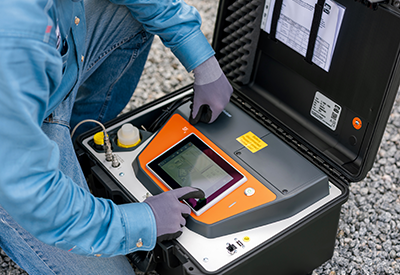
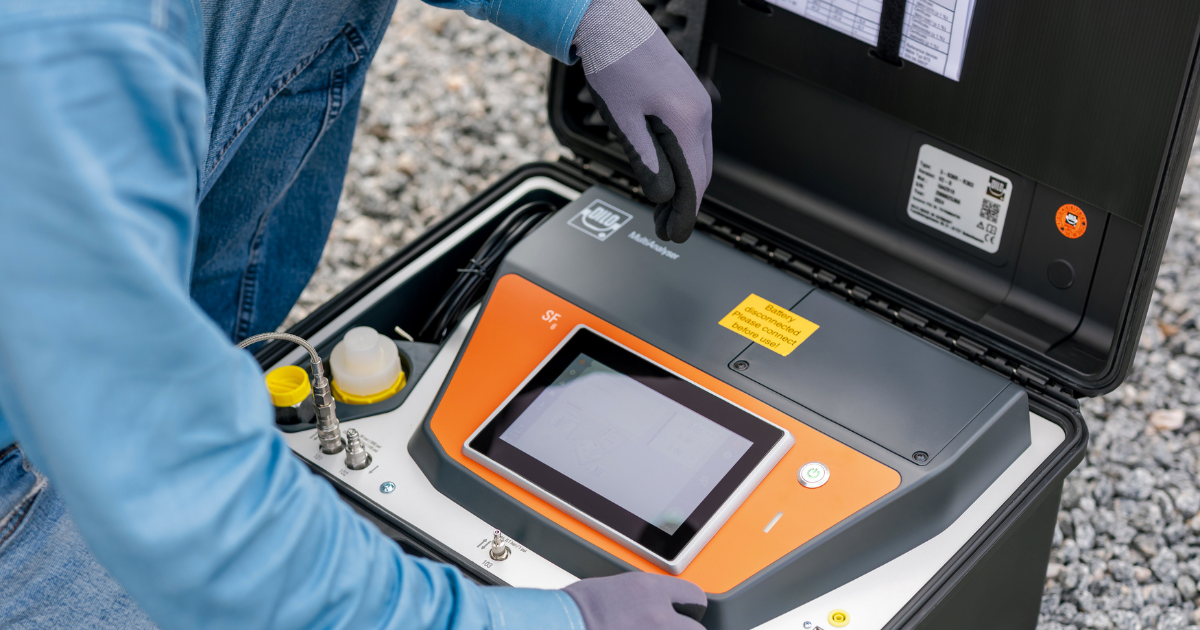
For utilities that regularly perform commissioning, scheduled maintenance, or gas reuse certification, an SF6 multi-analyzer is typically the preferred solution.
A multi-analyzer measures several critical gas quality parameters from a single sample. Depending on the model, that may include SF6 purity, moisture, SO₂, HF, H₂S, and CO.
This is particularly important for IEC 60480 compliance because gas suitability cannot be determined from purity measurements alone. Moisture and decomposition products often provide critical information about equipment condition and gas reuse eligibility.
Testing all three primary parameters — purity, moisture, and decomposition products — provides a more complete assessment of gas condition than evaluating any single measurement independently.
That distinction is important because many purchasing teams initially focus on purity testing alone. In practice, utilities performing maintenance, commissioning, and gas reuse certification typically need visibility into all three categories of contamination.
The biggest advantage is efficiency. Technicians can evaluate the full condition of the gas during one sampling cycle rather than connecting separate instruments and performing multiple tests on the same compartment.
Modern SF6 multi-analyzer systems also increasingly include integrated gas return capability. Instead of venting sampled gas into the atmosphere, the analyzer returns it directly to the equipment compartment. This closed-loop approach helps reduce emissions while eliminating the need for separate gas capture and recovery equipment.
Utilities also benefit from a simplified testing workflow. Rather than connecting multiple devices to evaluate individual parameters, technicians can collect all critical gas quality data through a single connection point. This reduces testing complexity, minimizes contamination risk, and improves overall efficiency during maintenance activities.
Why Testing Purity Alone Is Not Enough
One of the most common misconceptions among first-time buyers is that SF6 purity alone determines gas condition.
In reality, a compartment can show an acceptable SF6 concentration while still containing excessive moisture or decomposition by-products. These contaminants can affect dielectric performance, accelerate equipment degradation, and influence whether gas can be reused under IEC 60480 guidelines.
SF6 purity confirms whether the gas has been diluted or contaminated with air. Moisture measurements help identify water vapor that can contribute to acid formation and reduced insulation performance. Decomposition products such as SO₂ can indicate internal arcing, discharge activity, or aging gas conditions.
Evaluating all three parameters together provides a more complete picture of gas health and equipment condition.
For this reason, utilities performing maintenance, commissioning, or gas reuse certification typically evaluate purity, moisture, and decomposition products together rather than relying on a single measurement.
A multi-analyzer simplifies this process by collecting all critical gas-quality data in a single test, helping maintenance teams make more informed decisions while reducing testing complexity in the field.
Continuous Online Monitoring Systems
While portable analyzers remain the primary tool for maintenance and gas quality verification, some facilities also require continuous visibility into gas conditions.
Online SF6 gas monitoring systems remain permanently installed on equipment and continuously track parameters such as pressure, density, moisture, and, in some cases, gas composition.
These systems are most commonly used on critical GIS assets, remote substations, offshore installations, and facilities implementing predictive maintenance programs.
The primary advantage is trend visibility. Operators can identify gradual moisture ingress, density changes, or developing issues before they become significant maintenance concerns.
Rather than replacing periodic gas analysis, online monitoring systems typically complement broader maintenance and asset management strategies.
Accuracy, Calibration, and Long-Term Ownership Costs
Accuracy requirements vary significantly depending on the application.
A utility certifying reused gas under IEC 60480 will generally require higher precision than a team performing basic condition verification.
Moisture measurement accuracy is especially important because SF6 dew point readings directly affect reuse decisions. High-end analyzers often use advanced sensing technologies to provide accurate measurements across a wide range of operating conditions.
Like any precision instrument, SF6 analyzers also require calibration.
Most manufacturers recommend periodic factory calibration, though some utilities verify analyzers more frequently, depending on internal compliance requirements. Electrochemical sensors used for decomposition analysis may also require replacement over time.
When evaluating the total cost of ownership, purchasing teams should look beyond the initial purchase price. Calibration services, sensor replacement, hoses, filters, training, and accessories all contribute to long-term operating costs.
For many utilities, the ability to evaluate multiple gas quality parameters with a single instrument often outweighs the additional upfront investment.
Don't Overlook the Accessories and Adapter Kit
One of the easiest ways to create inaccurate readings is through poor sampling connections.
Improper hoses or couplings can allow ambient moisture into the sample stream, contaminating measurements before the gas even reaches the analyzer.
That is why many utilities purchase analyzers alongside an adapter kit that includes DN8 or DN20 couplings, pressure-reducing adapters, self-sealing hoses, and recovery accessories.
For field technicians, having the proper connection hardware is just as important as the analyzer itself, helping ensure safe operation and accurate, repeatable measurements.
When an Alternative Gas Analyzer Is Required
Not every switchgear application uses pure SF6 anymore.
Many utilities and OEMs are now working with alternative insulating gas mixtures that require dedicated measurement technology. Gas compositions containing C4-FN, as well as other SF6-free alternatives, require analyzers calibrated specifically for those gas formulations.
In these situations, a standard SF6 analyzer will not provide accurate or reliable results.
For alternative gas applications, DILO's Multi-Analyzer C4 is designed to verify multiple gas quality parameters in a single measurement. Depending on the configuration, the device can measure C4-FN concentration, moisture, oxygen, carbon dioxide, and carbon monoxide while returning the sampled gas back to the equipment compartment without emissions.
For utilities evaluating alternative insulating gases or planning a transition away from SF6, dedicated alternative gas analyzers can help ensure accurate measurements, regulatory compliance, and long-term asset reliability.
Find the Right SF₆ Gas Analyzer for Your Application
The best SF6 gas analyzer is one that provides the information needed to make confident maintenance and gas management decisions.
For most utility maintenance, commissioning, and gas reuse applications, a multi-analyzer provides the most complete assessment of SF6 gas quality. It measures purity, moisture, and decomposition products in a single test, helping utilities improve decision-making, reduce contamination risk, and support IEC 60480 compliance requirements.
Explore DILO's range of SF6 multi-analyzers for comprehensive gas quality testing. For alternative insulating gas applications, the DILO Multi-Analyzer C4 provides dedicated measurement capabilities for emerging gas technologies and future-ready switchgear environments.

WRITTEN BY
DILO Team