

SF6 delivers excellent dielectric performance, but moisture quietly undermines switchgear reliability over time.
Even low moisture levels inside an SF6 compartment can lead to condensation, corrosion, acid formation, and insulation degradation during switching events. That is why monitoring the SF6 dew point is a critical part of GIS and circuit breaker maintenance.
This article explains how moisture enters SF6 equipment, what it chemically does under operating and fault conditions, why IEC 60480 sets the −41.5 °C dew point limit, and how technicians test SF6 moisture levels in the field.
How Moisture Enters an SF₆ Gas Compartment
Moisture contamination rarely comes from a single catastrophic event. In most cases, it accumulates gradually under normal service conditions, due to handling errors, or as components age.
Improper or Incomplete Evacuation Before Filling
One of the most common causes is insufficient evacuation before gas filling. If humid air remains trapped inside the compartment because vacuum levels were not held long enough, residual moisture becomes sealed inside the equipment.
Even low residual humidity can later elevate the SF6 gas dew point beyond acceptable limits.
Gasket and O-Ring Aging
Over time, elastomer seals experience thermal cycling, compression set, and changes in permeability. While SF6 pressure tends to diffuse outward, water vapor from ambient air slowly migrates inward.
This gradual ingress may take years to become noticeable, which is why trending dew point values over time is essential for asset management teams.
Cylinder and Hose Moisture Ingress
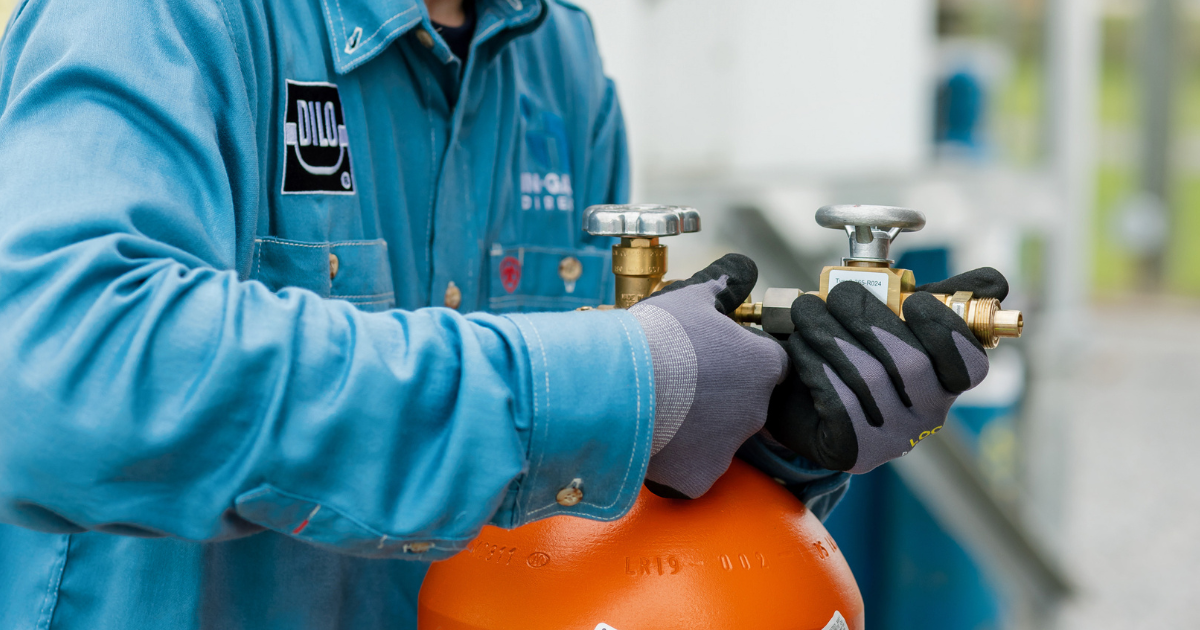
Moisture can also enter during routine service operations through uncapped hoses, wet fittings, improperly stored cylinders, or contaminated top-off gas.
Outdoor cylinder storage is especially problematic when condensation forms internally due to temperature swings.
Proper SF6 gas handling practices significantly reduce this risk.
Desiccant Saturation
Many GIS compartments contain molecular sieve materials designed to absorb water vapor. However, desiccants have finite absorption capacity.
Once saturated, they may no longer capture moisture effectively and can even release absorbed water back into the gas compartment under changing operating conditions.
Off-Gassing From Solid Insulation
Epoxy spacers and cast-resin insulation materials can slowly release absorbed moisture during early service life. This phenomenon is especially relevant in newly commissioned equipment.
Although gradual, this moisture release contributes to overall humidity levels inside the compartment.
What Moisture Chemically Does to SF₆
Under normal operating temperatures, SF6 is relatively stable in the presence of water vapor. Problems begin when temperature changes or electrical stress enters the equation.
Under Normal Service Conditions
At ambient conditions, moisture primarily exists as free water vapor mixed with the SF6 gas.
Once gas temperature drops below its dew point, condensation forms on internal surfaces such as tank walls, spacers, and bushings. These conductive moisture films reduce surface flashover strength and increase the risk of tracking.
In cold climates, frost formation may also occur if the dew point exceeds the minimum ambient temperature.
This is one reason why utilities carefully monitor the acceptable dew point for SF6 gas throughout the equipment lifecycle.
Under Arcing or Partial-Discharge Conditions
The more serious issue occurs during switching operations, internal arcing, or partial discharge activity.
High arc temperatures break SF6 molecules into reactive fragments, including SF₄, SF₂, and S₂F₂. When moisture is present, these decomposition products react chemically with water vapor to create harmful acidic compounds.
Typical reactions include:
- SF₄ + H₂O → SOF₂ + 2HF
- SOF₂ + H₂O → SO₂ + 2HF
These reactions generate hydrofluoric acid (HF), sulfur dioxide (SO₂), sulfuryl fluoride (SO₂F₂), and other aggressive by-products.
The higher the moisture concentration, the greater the amount of acid generated during each arc event.
How Moisture and By-Products Damage Switchgear
Moisture-related degradation affects both metallic and insulating components inside the equipment.
HF and sulfur-based by-products attack aluminum, copper, and silver-plated contacts. Corrosion gradually increases contact resistance and reduces operational reliability.
Solid insulation systems are also vulnerable. Epoxy spacers and cast-resin barriers absorb acidic contaminants, which contribute to:
- Surface tracking
- Reduced creepage withstand
- Long-term embrittlement
- Increased partial discharge activity
For maintenance crews, decomposition products also create a safety concern during compartment opening and servicing.
This is why continuous monitoring of SF6 gas quality has become a standard reliability practice across utilities and transmission operators.
Why IEC 60480 Sets the −41.5 °C Dew Point Limit
IEC 60480 establishes the criteria for the reuse of recovered SF6 from electrical equipment.
For reused SF6 intended for general application, the standard specifies a moisture content limit of 99.5 ppmv, which corresponds to a dew point of approximately −41.5 °C at atmospheric pressure.
This threshold exists for several practical engineering reasons.
First, it creates a substantial safety margin below expected operating temperatures in nearly all switchgear installations. That margin prevents internal condensation under normal environmental conditions.
Second, it limits free water concentration enough to minimize hydrolysis reactions and acid formation during expected switching operations.
Third, it helps reused gas perform similarly to new gas specified under IEC 60376.
New Gas vs. Reused Gas Limits
|
Standard |
Application |
Moisture Limit |
Approximate Dew Point |
|
IEC 60376 |
New SF6 |
~25 ppmw |
≈ −36 °C |
|
IEC 60480 |
Reused SF6 |
≤ 99.5 ppmv |
≤ −41.5 °C |
|
Typical OEM Guidance |
In-service GIS |
200–500 ppmv |
Warmer values |
It is important to note that ppmv and ppmw are not interchangeable. Many technicians use an SF6 dew point calculator to convert between concentration units and dew point temperature.
How to Test SF₆ Dew Point in the Field
Routine dew point testing is one of the most effective predictive maintenance activities for GIS and circuit breakers.
Chilled-Mirror SF₆ Dew Point Analyzer
A chilled-mirror SF6 dew point analyzer is considered the reference-grade method for measurement.
The instrument cools a polished mirror until condensation or frost first appears. The temperature at which condensation forms corresponds directly to the gas dew point.
Because this method measures physical condensation rather than estimating humidity indirectly, chilled-mirror systems provide highly accurate, traceable measurements.
Capacitive Moisture Sensors
Portable SF6 gas dew point meter units commonly use capacitive polymer or ceramic humidity sensors.
These analyzers respond quickly and are practical for field service work, though periodic calibration remains essential.
Multi-Parameter SF₆ Gas Analyzers
Modern SF6 dew point detector systems often combine several measurements into a single portable instrument.
Typical parameters include:
- SF6 purity
- Moisture content
- SO₂ concentration
- HF concentration
- CO concentration
Using a single sampling connection reduces handling time and minimizes gas emissions during testing.
Practical SF₆ Dew Point Testing Tips
Accurate measurements depend heavily on correct field procedure.
When performing an SF6 dew point test:
- Always specify whether the dew point is referenced to atmospheric or operating pressure
- Allow gas temperature to stabilize before testing
- Avoid sampling immediately after filling operations
- Use leak-tight self-sealing couplings
- Keep hoses capped and dry
- Calibrate analyzers annually against a chilled-mirror reference
These steps improve repeatability and reduce the chance of false readings caused by ambient moisture ingress.
What Happens if the Dew Point Fails the Limit?
If measurements exceed the SF6 dew-point limit specified in IEC 60480, corrective action is usually required.
Common remediation steps include:
- Vacuum evacuation and refill cycles
- Replacement of desiccant cartridges
- Leak inspection and gasket replacement
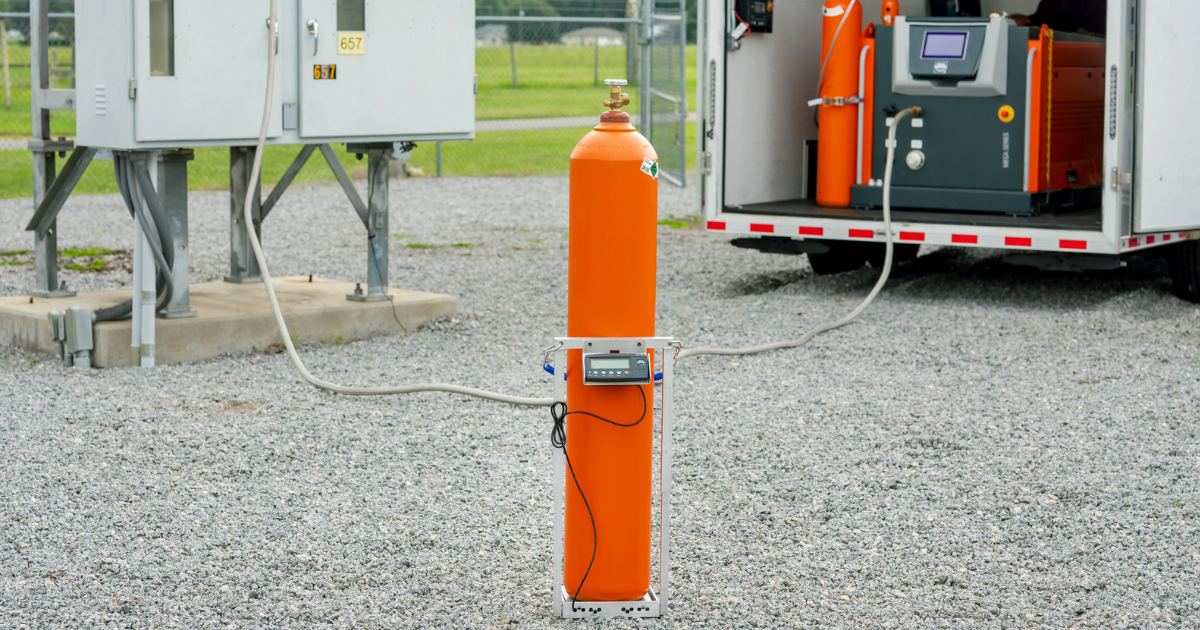
- Gas drying using service carts with filtration systems
- Off-site gas reconditioning services
Tracking dew point trends over time also helps maintenance teams identify slow gasket degradation before serious contamination develops.
As environmental oversight increases, moisture management also supports broader compliance initiatives. New SF6 regulations include stricter reporting requirements, inventory tracking, and a systemwide SF6 emissions limit of 1% based on a rolling three-year average beginning in 2030.
Keep Your SF₆ Dew Point Inside IEC 60480 Limits
Routine moisture testing is one of the most effective ways to prevent insulation degradation, acid formation, and long-term damage to switchgear.
DILO’s portable SF6 analyzers and reference-grade chilled-mirror systems help utilities and service crews accurately measure moisture, SF6 purity, and decomposition by-products directly in the field. Routine testing helps identify moisture issues before they impact switchgear performance.
Learn more about DILO's Multi-Analyzer SF6 and other SF6 gas quality solutions. For gas that exceeds IEC 60480 moisture limits, In-Gas Direct provides SF6 gas handling services to help restore gas quality and support compliance requirements.

WRITTEN BY
DILO Team