
What Is SF₆ Gas Density and Why Does It Matter
SF₆ gas density refers to the amount of gas mass contained within a given volume of a sealed system. Unlike pressure alone, density directly reflects how much insulating medium is actually present inside a gas compartment. This distinction is critical because electrical insulation strength depends on gas density, not pressure.
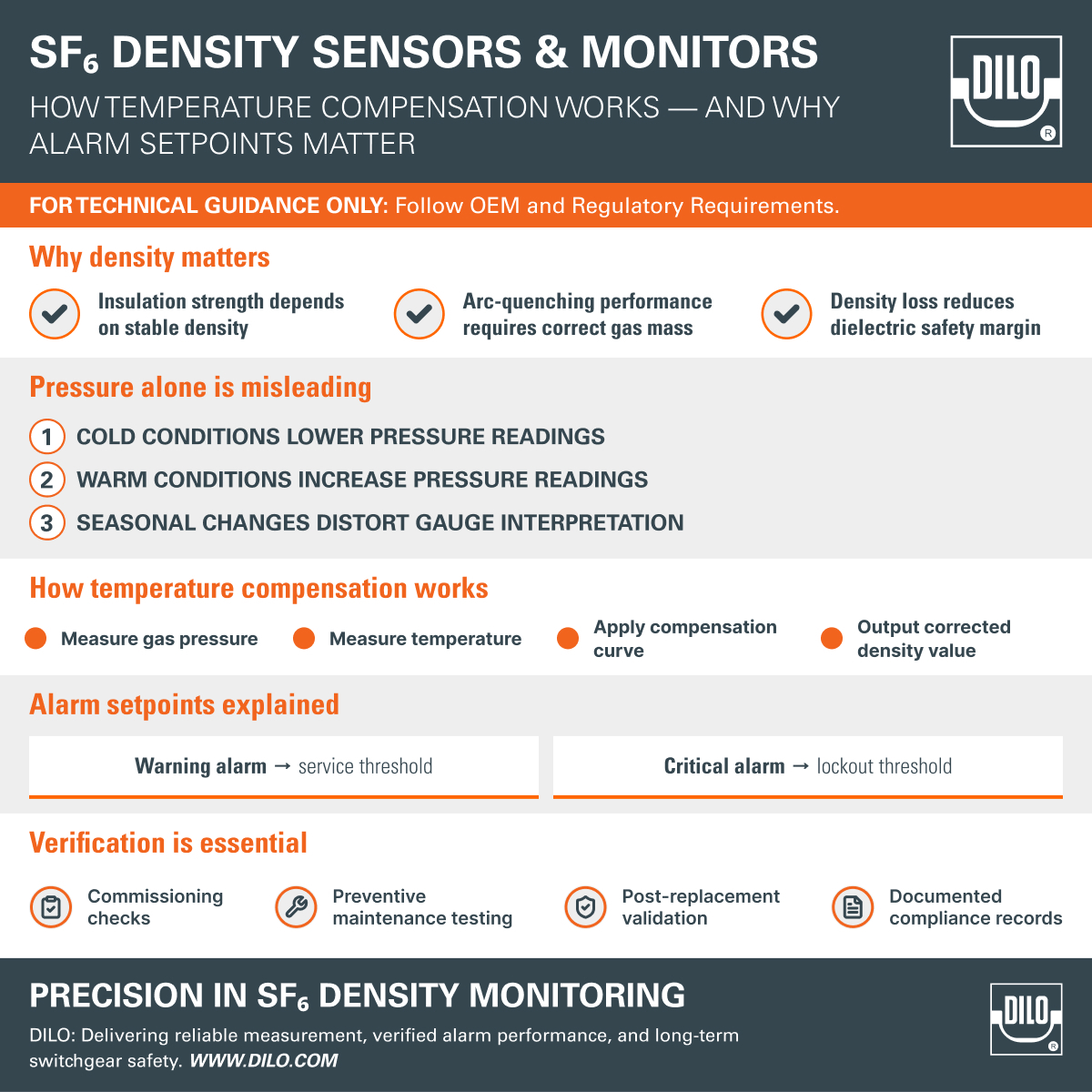
In a sealed GIS enclosure, pressure can fluctuate throughout the day as ambient temperature rises and falls. A cold environment can lower pressure even when the gas quantity remains unchanged, whereas higher temperatures can increase pressure without providing any insulating benefit. Relying solely on a gas pressure gauge or pressure transmitter can therefore lead to incorrect conclusions about the condition of the SF₆ gas.
Density monitoring avoids this problem by accounting for temperature effects. By determining whether a pressure change is caused by temperature variation or actual gas loss, SF₆ gas density measurement provides a much more reliable indication of system health. This is essential for maintaining dielectric performance, ensuring effective arc quenching, and preventing partial discharge or insulation failure.
SF₆ Gas Density Sensors and Density Monitors Explained
An SF₆ gas density sensor is designed to measure both pressure and temperature inside a gas-filled compartment and convert those values into a temperature-corrected density signal. Rather than displaying raw pressure data, the sensor calculates the equivalent gas density referenced to a standard temperature, allowing consistent evaluation regardless of ambient conditions.
An SF₆ gas density monitor builds on this principle by adding alarm functions, signaling outputs, and sometimes communication interfaces. These monitors are typically mounted directly on gas compartments in insulated switchgear and continuously evaluate whether gas density remains within acceptable operating limits. When density falls below predefined thresholds, warning or critical alarms are triggered.
Modern SF₆ gas density equipment often integrates several components into a single device, including pressure transmitters, temperature sensors, density gauges, and electrical alarm contacts. In more advanced systems, density monitors may interface with gas detectors or hybrid gas monitoring solutions, particularly in installations where environmental monitoring and leak detection are required alongside density control.
These systems are widely used across gas-insulated switchgear, circuit breakers, gas-insulated busbars, and other high-voltage assets where consistent insulation performance is essential.
How Temperature Affects SF₆ Gas Density Measurements
The behavior of SF₆ gas follows basic physical principles governing pressure, volume, and temperature. When temperature increases, gas pressure rises; when temperature decreases, pressure drops. Importantly, these pressure changes can occur even when the actual amount of gas in the system remains constant.
This is why standard pressure readings can be misleading in insulated switchgear applications. A pressure drop on a cold morning may look like a leak, while a pressure increase during warm weather could mask a gradual loss of gas. Without temperature compensation, operators may face nuisance alarms, unnecessary maintenance interventions, or worse—missed detection of real gas losses.
Temperature compensation addresses this issue by normalizing pressure readings to a reference temperature. By doing so, SF₆ gas density sensors ensure that variations caused purely by temperature do not affect density evaluation. This makes density monitoring far more reliable than pressure-only measurement and allows alarm setpoints to remain meaningful throughout the full operating temperature range.
How Temperature Compensation Works in Practice
Temperature-compensated SF₆ gas density sensors rely on integrated temperature measurement combined with internal compensation algorithms. The sensor continuously records gas pressure and temperature inside the compartment. Using predefined gas characteristics and manufacturer-approved correction curves, the device calculates the equivalent density value as if the gas were at a standard reference temperature.
This process happens in real time. As environmental conditions change, the density value remains stable as long as the actual gas quantity is unchanged. If gas begins to leak, the density reading drops regardless of temperature, allowing the monitoring system to respond accurately.
In practical terms, this means that operators can trust density readings to reflect true insulating conditions, rather than reacting to normal seasonal or daily temperature fluctuations. For high-voltage installations where safety margins are critical, this reliability is essential.
Alarm Setpoints and Their Role in SF₆ Density Monitoring
Alarm setpoints define the density thresholds at which a system signals that attention is required. Most SF₆ gas density monitors use at least two levels of alarms. A warning alarm typically indicates that density has dropped below a recommended level and maintenance should be planned. A critical alarm signals that density has fallen to a point where safe operation may no longer be guaranteed.
These setpoints are usually determined by the equipment manufacturer and are based on design requirements, insulation margins, and applicable industry standards. Because density monitors use temperature-compensated values, alarm thresholds remain consistent across different ambient conditions.
Without proper compensation, alarm setpoints would shift with temperature, making them unreliable. Temperature-compensated SF₆ gas density monitoring ensures that alarms reflect actual gas loss rather than environmental effects, improving both safety and operational efficiency.
Verifying Alarm Setpoints for Accuracy and Compliance
Even the most advanced SF₆ gas density monitor must be verified periodically to ensure that alarm setpoints trigger at the correct density values. Verification confirms that the sensor, compensation logic, and alarm contacts are functioning as intended.
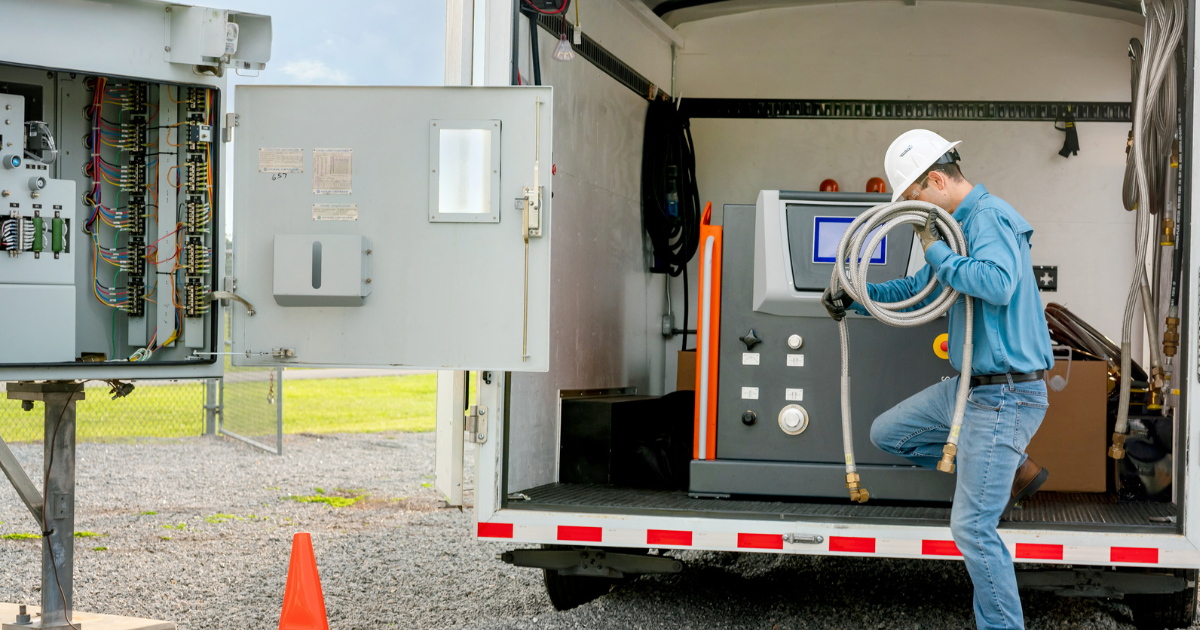
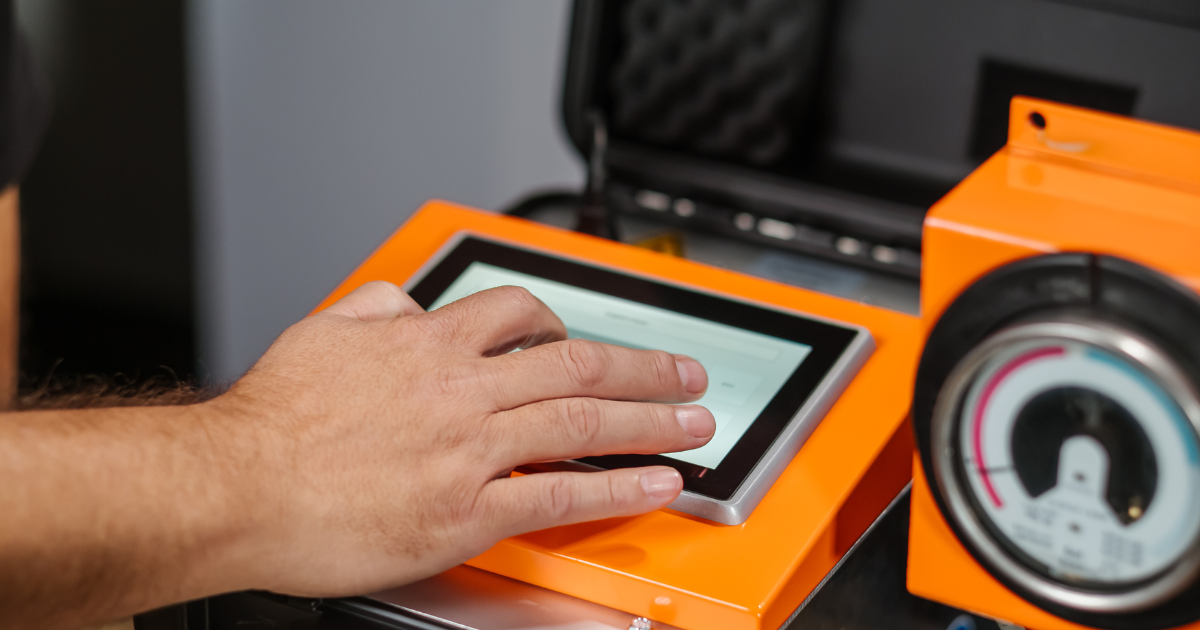
Test systems such as DensiControl DA allow technicians to simulate defined density conditions without removing the monitor from service. These devices make it possible to check alarm activation points accurately and efficiently during commissioning or routine maintenance.
During verification, the density monitor is typically isolated from the gas compartment using dedicated fittings. Secure isolation is critical, which is why components such as Lock Valves for Density Monitors are commonly used. They allow testing without releasing SF₆ gas and help maintain both safety and environmental compliance.
Best practice involves documenting verification results, comparing measured alarm points to OEM specifications, and repeating the process at defined intervals or after maintenance work. Regular verification ensures the continued reliability of SF₆ gas density monitoring systems and supports regulatory compliance.
SF₆ Gas Density Equipment and Monitoring Solutions
SF₆ gas density equipment is available in several configurations, each suited to different operational needs. Standalone density gauges provide local visual indication and basic alarm functionality, making them suitable for simpler installations where remote monitoring is not required.
Integrated density monitoring systems combine electronic sensors, alarm outputs, and communication interfaces to enable continuous monitoring and integration with SCADA or asset management systems. These solutions are commonly used in modern substations and industrial facilities where centralized monitoring is essential.
Hybrid systems go a step further by combining density monitoring with gas detection or environmental monitoring. These setups are often chosen for installations with strict safety or environmental requirements, where early leak detection and comprehensive gas management are priorities.
Choosing the right SF₆ gas density monitoring solution depends on system complexity, safety requirements, and operational strategy.
Maintenance and Calibration Considerations
Like all measurement devices, SF₆ gas density sensors require periodic calibration and inspection. Over time, sensor drift, component aging, or environmental exposure can affect measurement accuracy. Regular calibration ensures that temperature compensation remains effective and alarm setpoints remain reliable.
Manufacturers typically recommend annual verification for critical assets, with additional checks after gas handling operations or major maintenance activities. Warning signs such as frequent false alarms, inconsistent readings, or unexplained alarm behavior should prompt immediate inspection.
Proactive maintenance not only improves measurement accuracy but also reduces the risk of unexpected outages and extends the service life of insulated switchgear.
SF₆ gas density sensors and density monitors play a crucial role in the safe and reliable operation of gas-insulated switchgear. By measuring true gas density rather than raw pressure, they provide an accurate picture of insulation conditions inside high-voltage equipment.
Temperature compensation is the key enabling technology that makes this possible. It eliminates errors caused by environmental changes, stabilizes alarm setpoints, and ensures that density monitoring reflects real gas loss rather than normal temperature variation. Verifying alarm setpoints using proper test equipment and isolation methods further strengthens system reliability and compliance.
For utilities, industrial operators, and maintenance professionals, understanding how SF₆ gas density monitoring works and how to maintain it properly is essential for protecting assets, ensuring safety, and achieving long-term operational confidence.