MEDICAL PROCEDURES
SF₆ has been used in certain ophthalmology procedures, including retinal surgeries where a gas bubble may assist healing.
SF₆ — USEFUL INFORMATION
SF₆ gas (sulfur hexafluoride) is a colorless, odorless, non-flammable insulating gas widely used in the electrical power industry. Its unique physical and chemical properties make it highly effective for medium- and high-voltage equipment where reliable insulation and arc interruption are critical.
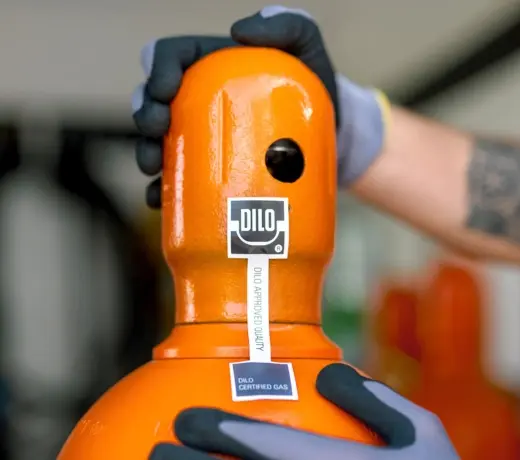
PROPERTIES
SF₆ gas is widely used in electrical applications because of its unique physical and chemical characteristics. These properties made SF₆ the preferred insulating gas for many medium- and high-voltage applications for decades. From a chemically stable composition to its ability to withstand extreme conditions, SF₆ gas is highly sought after for insulating uses and more. SF₆ gas is colorless, odorless gas with a vapor density five times that of air. It is able to stay in vapor form (at normal operating temperatures) up to about 250 PSI. Some additional properties of SF₆ which make it very desirable to the electrical utility sector are:
SF6 — one sulfur atom, six fluorine atoms
These properties made SF₆ the preferred insulating gas for many medium- and high-voltage applications for decades.
Where it comes from
During the Kyoto Protocol, a global convention where world leaders discussed strategies to reduce greenhouse gas emissions, SF₆ was named one of the six gases with the most potential to contribute to global warming.
Given this concern, SF₆ gas is not manufactured in the United States. Instead, all virgin gas must be imported from other countries, which have fewer environmental regulations. It's during the manufacturing process that significant SF₆ emissions are created causing a negative impact on the environment.
WHERE IT'S USED
Approximately 80% of global SF₆ usage occurs within the electrical industry — primarily as a dielectric insulator in medium- and high-voltage Gas-Insulated Equipment (GIE).
Absorbs the energy of the arc drawn when contacts part, and extinguishes it fast enough to interrupt fault current safely.
Lets a full switching bay sit in a fraction of an air-insulated footprint — the reason GIS exists at all.
Holds off the full system voltage across an open gap, isolating a section for work without an air clearance.
Carries power between bays in a sealed enclosure where an overhead run would need far more space and clearance.
Grounds a de-energized section inside the sealed enclosure so it can be worked on safely.
BEYOND UTILITIES
Outside the electrical utility sector, SF₆ has also been used in select industrial and scientific applications, including:
SF₆ has been used in certain ophthalmology procedures, including retinal surgeries where a gas bubble may assist healing.
SF₆ can be used in plasma etching processes during semiconductor production.
In some regions, SF₆ has historically been used as a protective cover gas in magnesium processing.
SF₆ has also been used in particle accelerators and other specialized research environments.
Ophthalmologists perform a surgery called a vitrectomy to treat issues affecting the retina and vitreous (the gel-like fluid filling the space between the lens and retina). During the procedure, surgeons can use SF₆ to fill the void left after the vitreous gel is removed. It ensures the retina stays stable during recovery, and its high density can accelerate healing.
In some double-pane windows, a combination of SF₆ and argon gas is used to fill spaces between the two panes of glass. This mixture can absorb sound waves, lowering the volume of outside noise.
Manufacturers may leverage SF₆ as an etching gas because of its high density and large molecular size. Applications include producing semiconductor devices, among other components. Semiconductors are found in many common items, such as cell phones, televisions, and refrigerators.
Particle accelerators drive beams of charged particles at high speeds using electric fields. They have many applications, from radiation therapy to national security. SF₆ gas is often used as insulation in the accelerator tanks of this technology.
These examples provide more context around what SF₆ is used for beyond traditional utility applications.
HOW IT WORKS
SF₆ is primarily used in the electrical power industry because of its exceptional dielectric strength and superior insulating performance in medium- and high-voltage equipment.
In addition to insulation, SF₆ is highly effective at quenching electrical arcs created during switching operations. This makes it especially valuable in circuit breakers, switchgear, and other critical power applications — and is one reason SF₆ is used in compact, high-performance electrical systems.
SF₆ also offers strong thermal transfer characteristics, helping dissipate heat efficiently during operation. Compared with air, nitrogen, and some other insulating media, SF₆ has historically provided significant performance advantages in compact equipment designs.
When used in circuit breakers, SF₆ helps absorb energy from the arc and supports rapid arc extinction, allowing equipment to interrupt current safely and reliably.
These properties enabled manufacturers to develop smaller, higher-performance switchgear systems with strong operational reliability.
SUSTAINABILITY
Although SF₆ offers major technical benefits, it is also recognized as a potent greenhouse gas with a long atmospheric lifetime. Among the most important concerns associated with greenhouse gases, SF₆ emissions remain a major focus for utilities and industrial operators.
While carbon dioxide (CO2) is often at the center of discussions about greenhouse gas and climate change, United States Environmental Protection Agency (EPA) states SF₆ gas is 23,500 times better at trapping infrared radiation than a similar amount of CO2. Chemically stable, SF₆ also has an atmospheric lifetime of 3,200 years. This means SF₆ emissions can linger in the atmosphere for centuries without degrading.
What these values boil down to is that even a small amount of SF₆ can translate into a large impact on the global climate. As such, continual development has gone into alternative gases, and many companies have already eliminated its use in production. However, it will likely take some time for SF₆ gas to phase out of use altogether.
As such, continual development has gone into alternative gases, and many manufacturers and utilities are evaluating alternative insulating technologies where feasible. However, it will likely take time for SF₆ to phase out of use altogether.

![]()
SF₆ has a significantly higher global warming impact than CO₂ and can remain in the atmosphere for thousands of years.
ACCORDING TO THE U.S. EPA
There are steps businesses can take to mitigate the effect of SF₆ emissions. For instance, organizations in the electrical utility industry can devise strategies to operate more eco-friendly, such as refurbishing old equipment instead of manufacturing new equipment. Organizations that utilize SF6 can also invest in accredited training to properly handle the gas and limit their environmental impact. That is why organizations using SF₆ equipment increasingly focus on:
WHY IT MATTERS
Improper handling can lead to:
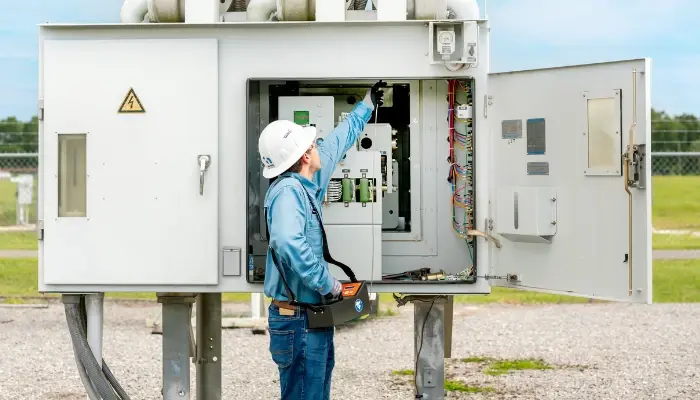
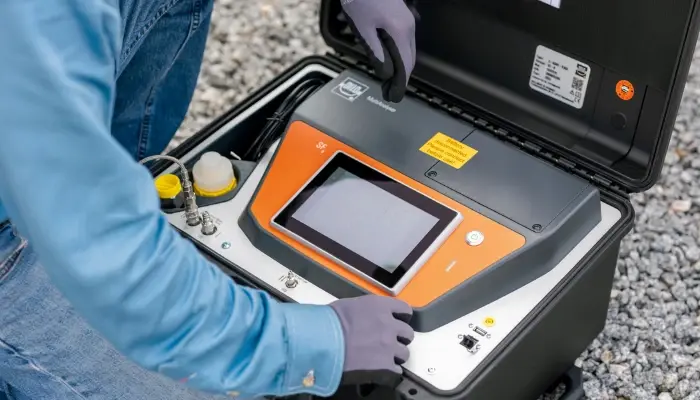
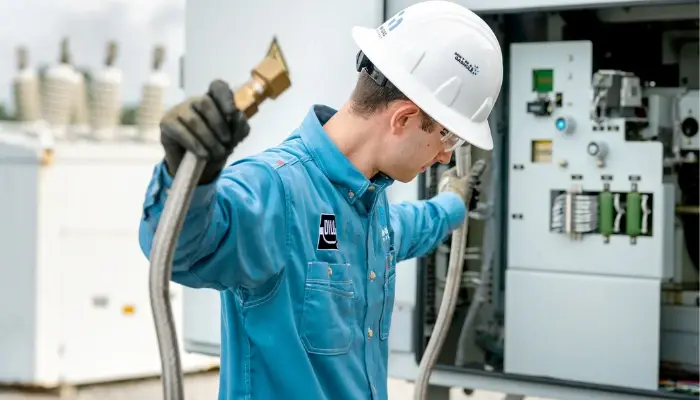
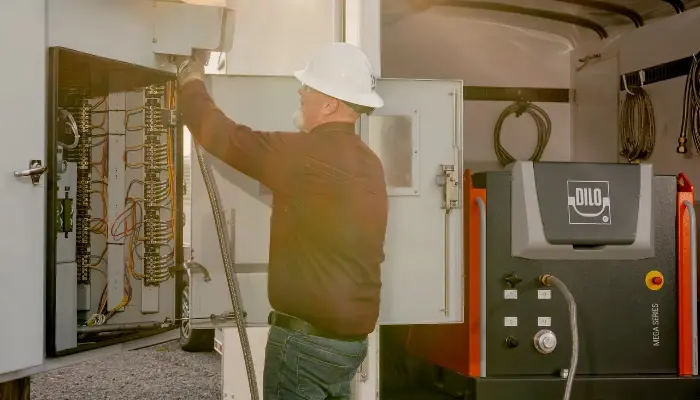
Using professional SF₆ gas handling equipment helps organizations recover, evacuate, refill, filter, and analyze gas efficiently while minimizing releases — and reduces the likelihood of preventable losses during transfer, storage, or movement from a gas cylinder. Safe handling of SF₆ gas is essential to ensure the well-being of individuals and the protection of the environment. Here are some key points for its safe handling:
Storage and Transportation
Store SF₆ cylinders in well-ventilated areas, away from ignition sources and heat. Follow regulations for storage and transportation, resources (FAQ's) are available on DILO's website.
Leak Detection
Regularly check for leaks using proper equipment and promptly repair any leaks to prevent SF₆ gas release.
Personal Protective Equipment
Ensure the use of appropriate PPE, including gloves, safety glasses, and protective clothing, when working with SF₆.
Disposal
Dispose of SF₆ gas and its containers in accordance with local regulations to minimize environmental impact. Properly handle and recycle SF₆ gas when possible.
Educate Personnel
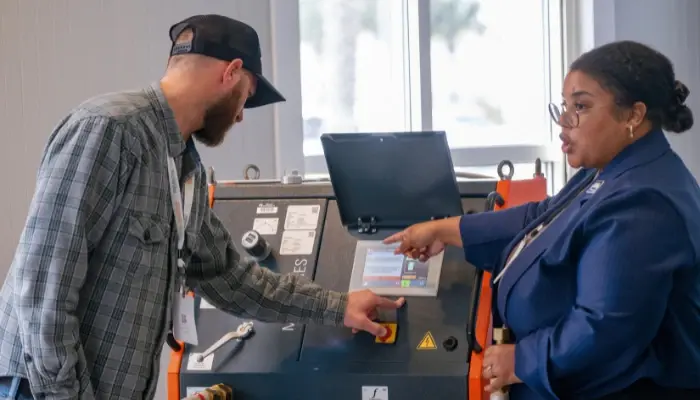
Provide thorough training on the properties, hazards, and safe handling procedures of SF₆ gas.
DILO SOLUTIONS
DILO Company, Inc. provides advanced solutions that help customers maintain equipment performance while supporting environmental goals.
HAVE QUESTIONS?
Questions about SF₆ regulations, safety, alternatives, reuse, leak detection, or proper handling? Visit our SF₆ Gas FAQ page for answers to common industry questions — including “what is the correct name for SF₆?”
VISIT THE SF₆ FAQGET SUPPORT
Whether you need equipment, service support, or expert guidance, our team is ready to help. Request equipment recommendations, training support, or expert guidance from DILO today.
REQUEST GUIDANCEDILO COMPANY, INC.
The same properties that make SF₆ an excellent insulating gas also make it a potent greenhouse gas. Quality gas handling products and well-trained technicians greatly reduce the risk of SF₆ emissions. Alongside zero-emission SF₆ gas handling equipment, DILO offers accredited SF₆ gas safety and handling training.